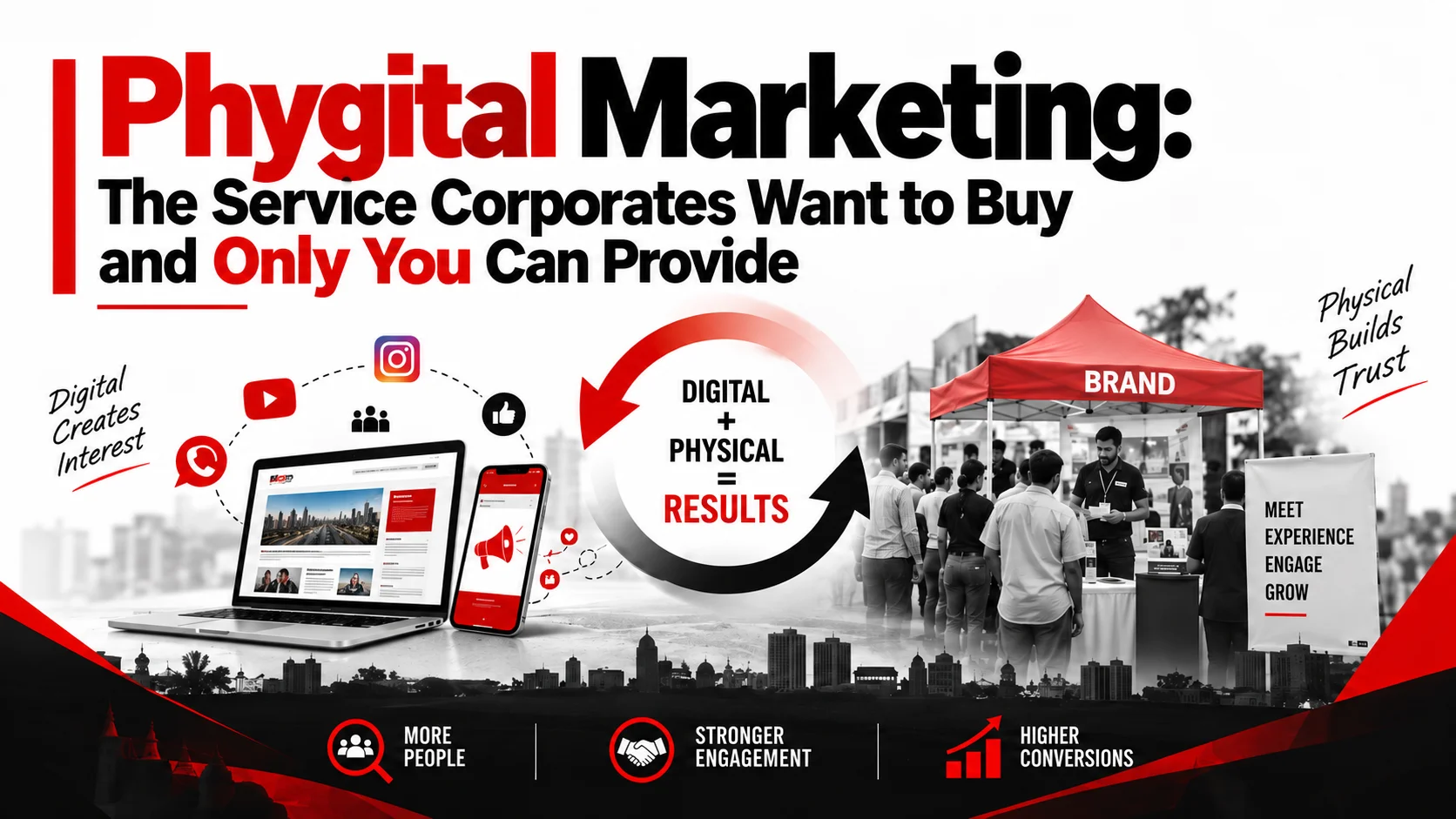
Phygital Marketing: The Service Corporates Want to Buy and Only You Can Provide
Introduction: Until now, you have been selling advertisements,which essentially means selling space. Space for banners, articles, or WhatsApp messages. The problem is that space is cheap, and its negotiation is equally cheap.
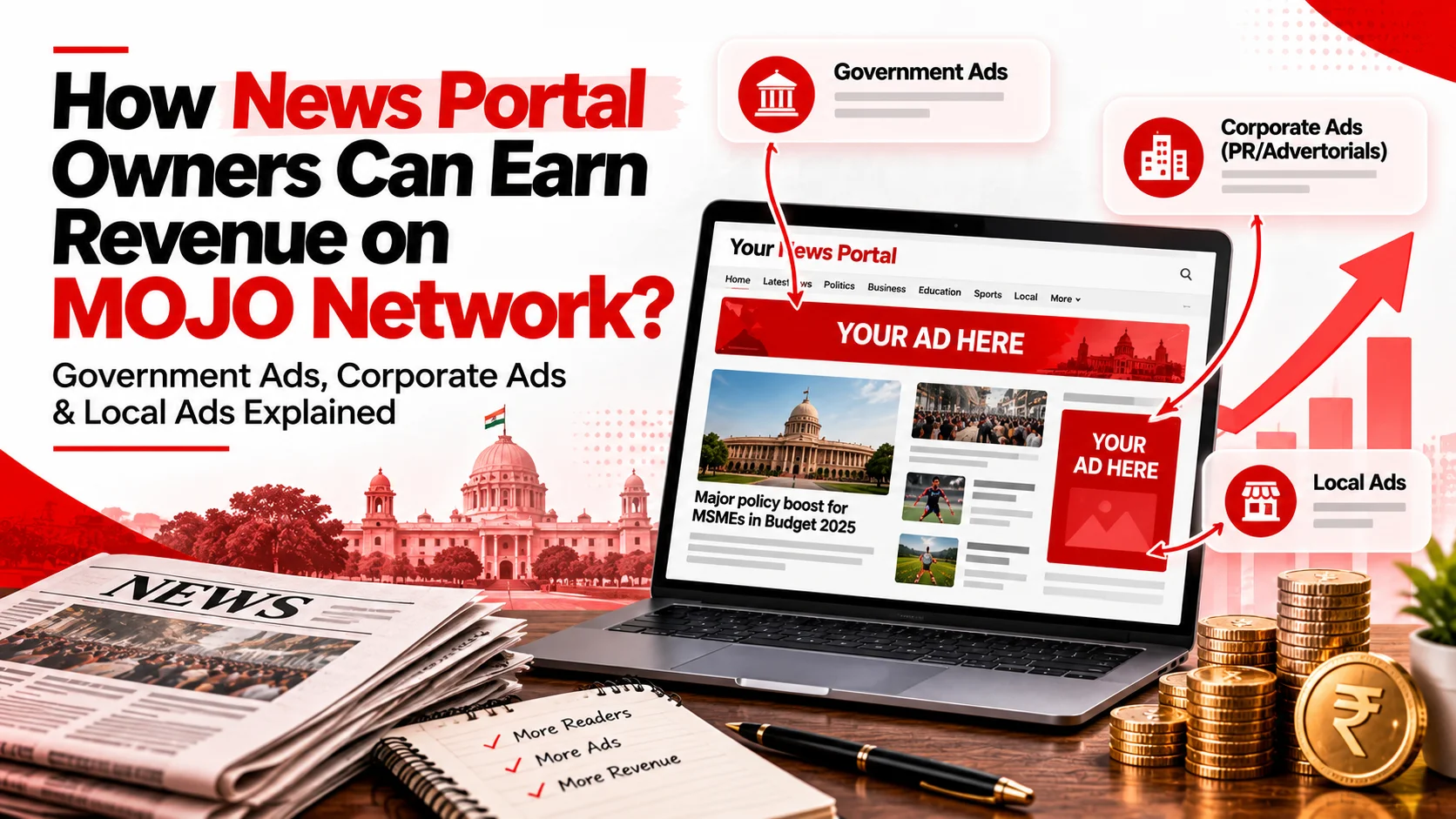
Big brands do not want to buy space; they want to buy campaigns. They want their message to reach the right district, engage people, bring them out on the ground, and have it all measured. This entire process is called Phygital Marketing, and this is exactly what shifts your pricing from ₹3,000 to ₹3,00,000.
The good news is that you already have what it takes to run these campaigns. The part you do not have,brand deals, pricing, and reporting,is handled by the MOJO Network. This article explains how you can deliver this service in your district.
What is Phygital Marketing?
Phygital is a combination of two words: Physical and Digital. It means integrating digital reach with on-ground action in a single campaign. The complete cycle involves three steps:
Inviting people via digital platforms.
Meeting them on the ground.
Bringing that physical meeting back to the digital space to measure it and expand reach.
Why are physical or digital incomplete on their own? Online advertising is cheap and has a massive reach, but it lacks trust,especially in small towns and villages where people don't make big financial or educational decisions just by looking at a screen. On the other hand, physical events build trust but are difficult to measure, leaving the brand unsure of their return on investment.
Phygital bridges this gap. It connects online reach with on-ground trust and converts the entire effort into measurable data. The campaign rests on three pillars: Digital Lead, Digital Engagement, and Physical Engagement.
Campaign Impact Mix
Why Will This Business Come to You?
Large brands have substantial budgets, digital agencies, and event management firms. Yet, they get stuck at the district level because their agencies have no boots on the ground. An agency sitting in Delhi or Mumbai cannot organize a camp in a small town in Satna.
This is where you step in. You already possess the four most critical assets required for this job:
Pincode-segmented Audience
Your readers are already sitting in the exact areas the brand wants to target.
Reputed Reporters
You have local journalists who live in those neighborhoods and villages, and whom people trust.
Direct WhatsApp Reach
You can send messages directly to individuals even if they haven't explicitly searched for them.
Local Trust & Coordination Power
You know exactly where to get permissions, which halls are available, and which days the local market is crowded.
These four assets cannot be bought with money; they are built over years. This is your true capital, and this is exactly what the brand wants to buy from you.
Pillar 1: Digital Lead
This is the first stage of the campaign, and its goal is to gather people.
You publish the brand's message as highly useful content on your portal (like a sponsored article), ending with a registration form or a "click-to-chat" link. The person who submits their information becomes your lead.
This is then distributed across your portal, WhatsApp channels, your reporters' area-wise tracking links, and social media. Pincode targeting is highly effective here because you only run ads in areas where actual customers live. The metrics for success are clear: how many clicks were generated, how many forms were filled, how many were valid, and the Cost Per Lead (CPL).
Pillar 2: Digital Engagement
Simply getting leads is not enough,names and numbers are just a "cold list." Digital Engagement warms up this list, turning a mere name into a relationship.
The tools for this are familiar: quizzes, polls, photo contests, Rangoli competitions, and festive games. The brand's message is subtly woven into these activities (e.g., a bank's financial literacy quiz, a coaching institute's question series, or a product guessing game).
This works because participants promote the content themselves to ask family and friends for votes, multiplying your reach for free. The brand gets what standard ads can never provide: the audience's time, brand recall, consensual data, and user-generated content.
Strict Rules to Follow Here:
- The brand bears the cost of the prizes, not you. You are the organizer; the brand is the sponsor.
- Publish rules, deadlines, and selection criteria clearly before starting. Keep contests strictly skill-based (e.g., best photo, right answer, best Rangoli) rather than luck or lottery-based, as games of chance invite complex state-by-state legal regulations.
Pillar 3: Physical Engagement
This is the peak of the campaign and commands the highest price, simply because no remote agency or app can execute it.
This involves on-ground events like health check-up camps, fair stalls, school/college seminars, counseling days, test rides, or felicitation ceremonies. The brand meets people face-to-face, which builds the strongest leads and the deepest trust.
Your role here is divided into five parts:
-
1
Bringing the Crowd: An empty stall is a brand's biggest embarrassment.
-
2
Local Permissions & Coordination: Securing venues, electricity, and police/municipal clearances.
-
3
Stage Management: Handling the on-ground flow.
-
4
Event Coverage: Capturing professional photos and videos.
-
5
Data Collection: Registering attendee details to convert the event into measurable numbers.
Here, your reporter network is your biggest asset. Eight reporters can mobilize people from eight different areas,something an external agency simply cannot do.
The Cycle Connecting All Three
Individually, these three pillars are ordinary. Their real power unlocks when they connect in a cycle.
Scenario: An auto dealer wants a 15-day campaign for a new scooter.
Phase 1: The Call
You publish a sponsored article about the scooter's features with a pincode-targeted test-ride booking link.
Result: 2,200 clicks, 340 bookings
Phase 2: The Engagement
You launch a "Scooter & My City" photo contest. Participants share it widely, boosting reach.
Result: Bookings increase to 420
Phase 3: The Meeting
A weekend Test Ride Day is held at a showroom or market square. Reporters invite the people who booked.
Result: 210 people attend and ride the scooter
Phase 4: The Coverage
Event photos, videos, and winner announcements go back on the portal. This reaches people who couldn't attend, generating the next wave of leads.
The brand gets a crystal clear picture: This many engaged, this many attended, this many booked. This ROI is what brings them back to you.
Your Job vs. MOJO's Job
This is where most portal owners hesitate,wondering who will negotiate with corporate giants, finalize rates, or generate complex reports. MOJO Network handles this entirely.
MOJO’s Responsibilities (Outside the District)
Corporate outreach, contracts, campaign structuring, setting packages/rates, delivering campaigns via slabs, measuring performance, sending final reports to the brand, and managing payments.
Your Responsibilities (On the Ground)
Actual execution. Distributing messages, gathering leads and entries, hosting events, local coordination, event coverage, and sending accurate data to the network on time.
The Advantage: You don't need to hire a corporate sales team, yet you access corporate budgets. You bypass negotiation headaches and report-formatting tasks. When your local market is slow, network campaigns keep your revenue flowing.
Note: This does not replace your direct local deals. Any deal you close directly with a local showroom or hospital remains 100% yours with no commission.
Ultimately, your real rating in this model is your Execution. Timely data, genuine event attendance, and authentic entries build trust, which guarantees bigger budgets for the next campaign.
Tech Infrastructure on MOJO
This workflow is possible because the technical infrastructure is already built into the platform. You get a fast, mobile-first portal with ready frameworks for sponsored articles and landing pages. Your ground team can upload content and data directly from the field via the Uploader App and sub-reporter logins. Campaigns are delivered directly to your portal via MOJO Ad Manager, and a dedicated Account Manager guides you through the execution.
Discipline and Legal Compliance
Breaking these core rules is incredibly costly:
Final Takeaway
Once you understand Phygital Marketing, one thing becomes clear: You are no longer just a district publisher; you are an execution partner.
Newspapers sell space; you run campaigns. Digital agencies count clicks from afar; you bring actual crowds on the ground. This is a capability neither big agencies nor massive platforms possess. The network handles the deals, you handle the ground, and through this partnership, your rates evolve from cheap ad space to high-value corporate campaigns.