Platform Independence: What Happens to Your News Portal's Domain, Brand, and Content if the Platform Shuts Down?
This is a fair, critical, and often unasked question. Any publisher considering a digital platform should ask this before signing up, not after. It is the exact question that separates a serious, transparent platform from a careless one, because the answer entirely depends on how ownership is arranged from the start.
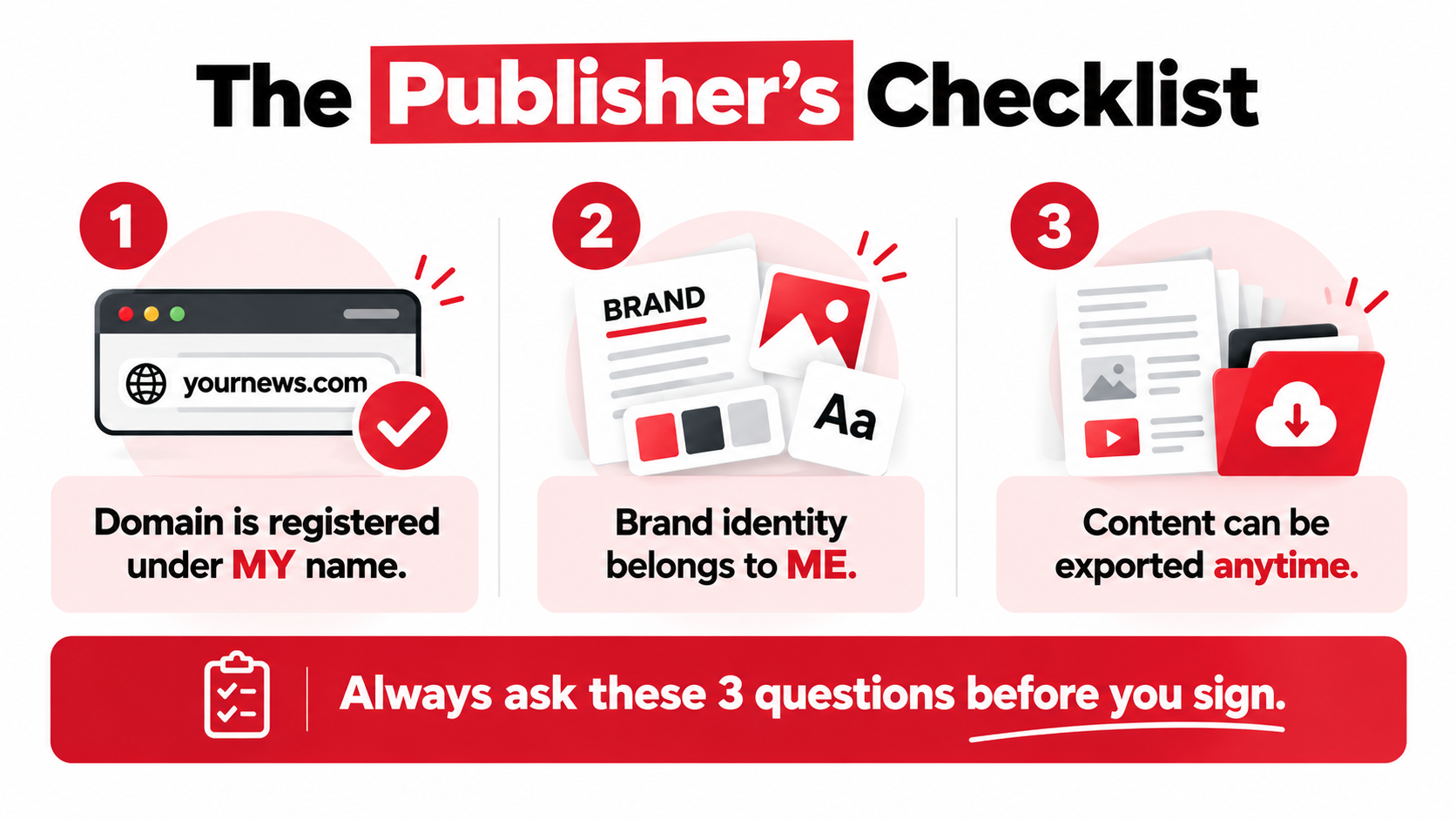
To understand your security, break the worry into its three tangible parts: your domain, your brand, and your archive of published work.
INFOGRAPHIC: The Three Pillars of Your Portal
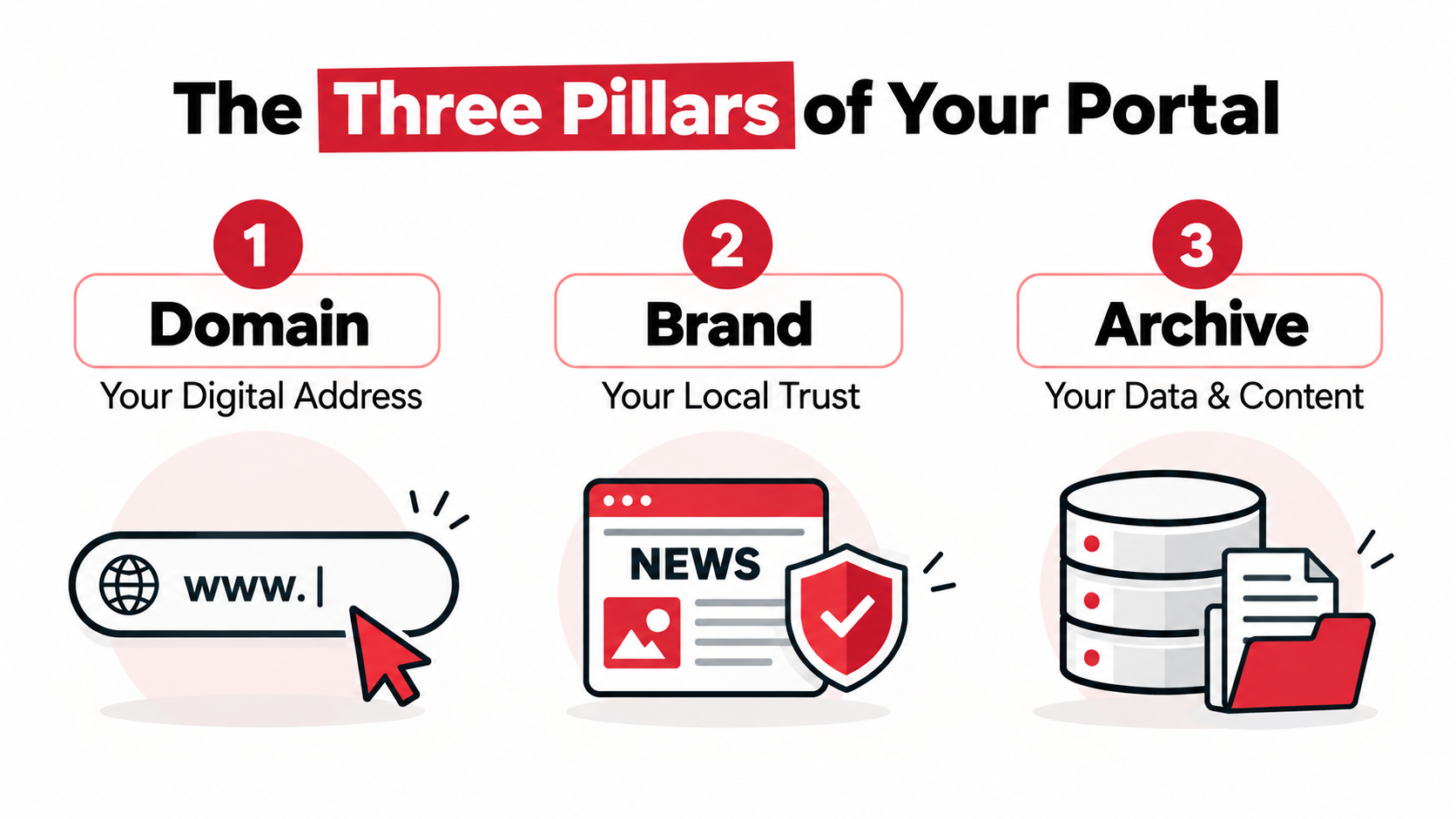
1. Domain Ownership: Protecting Your Digital Real Estate
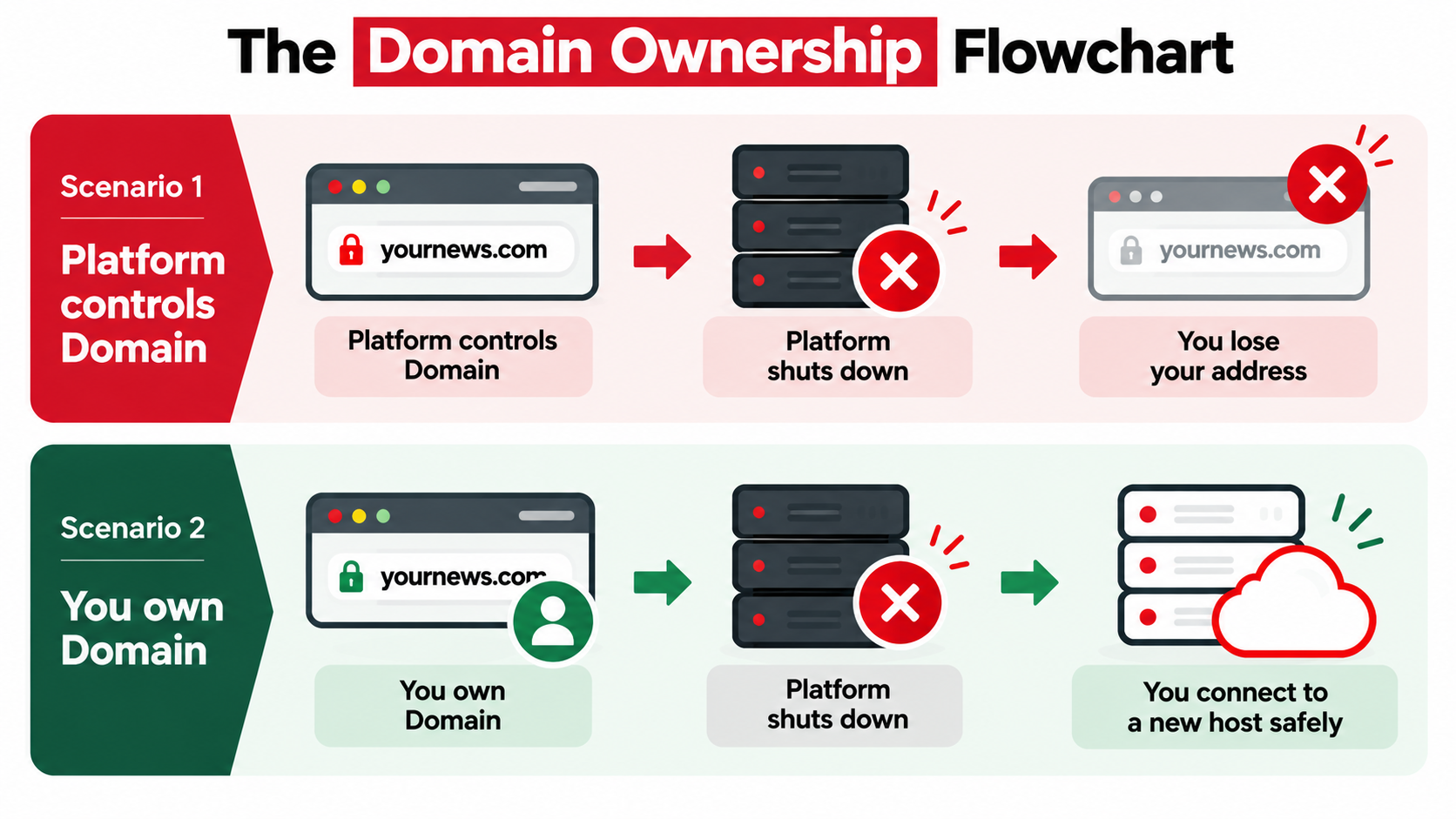
Your domain is the most clear-cut asset. A domain name is registered to an owner, and the only correct arrangement is that you are that owner, not the platform.
If the domain is registered in your name, then no matter what happens to the hosting service, the digital property remains yours. You can seamlessly point it to a new platform whenever you choose. This is the first thing to confirm before you commit. Ask directly whose name the domain is registered under; if the answer is anything other than yours, that is a red flag to resolve immediately at the outset.
INFOGRAPHIC: The Domain Ownership Flowchart
2. Brand Identity: Safeguarding Your Local Journalism Capital
Your brand is yours by nature. The name of your portal, your identity in the district, your local reputation, and your following—none of these belong to a software platform. They belong to you and the trust you have built with your readers.
A platform merely hosts your work; it does not own your name. If you ever move, your brand moves with you because it lives in your audience's recognition, not in the backend code.
3. Data Portability: Exporting Your Article Archive and Content
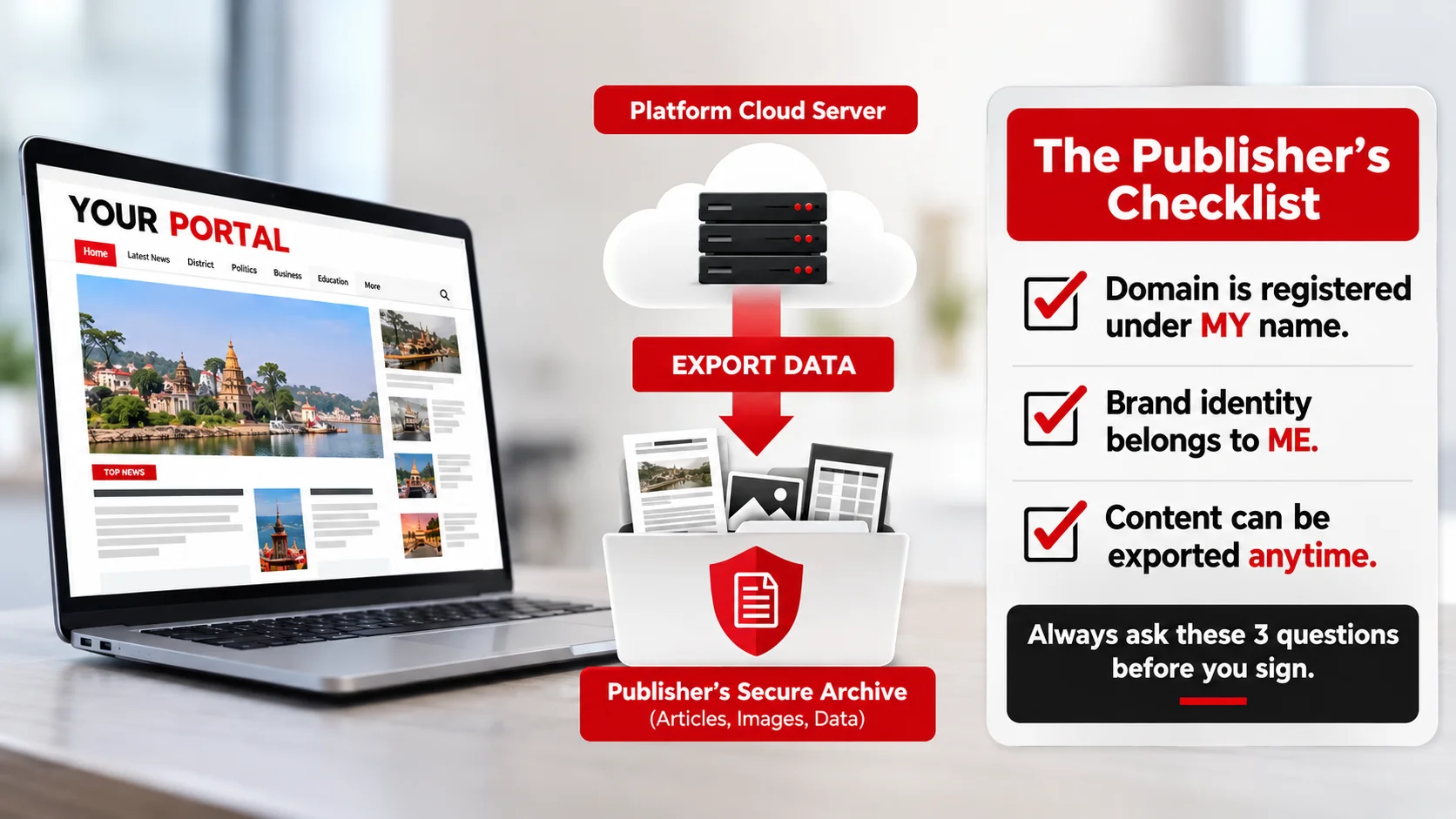
Your archive is the part that requires the most technical attention, and the right question to ask here is about data portability. A responsible platform allows you to export your content, published articles, and data in a standard format that you can easily take elsewhere.
Before committing, always ask two fundamental questions:
- 1. Can I export my full content if I choose to leave, and in exactly what format?
- 2. Are routine backups maintained?
If the answers are clear and reasonable, your life's work is protected regardless of the platform's own fate.
INFOGRAPHIC: The Data Portability Shield
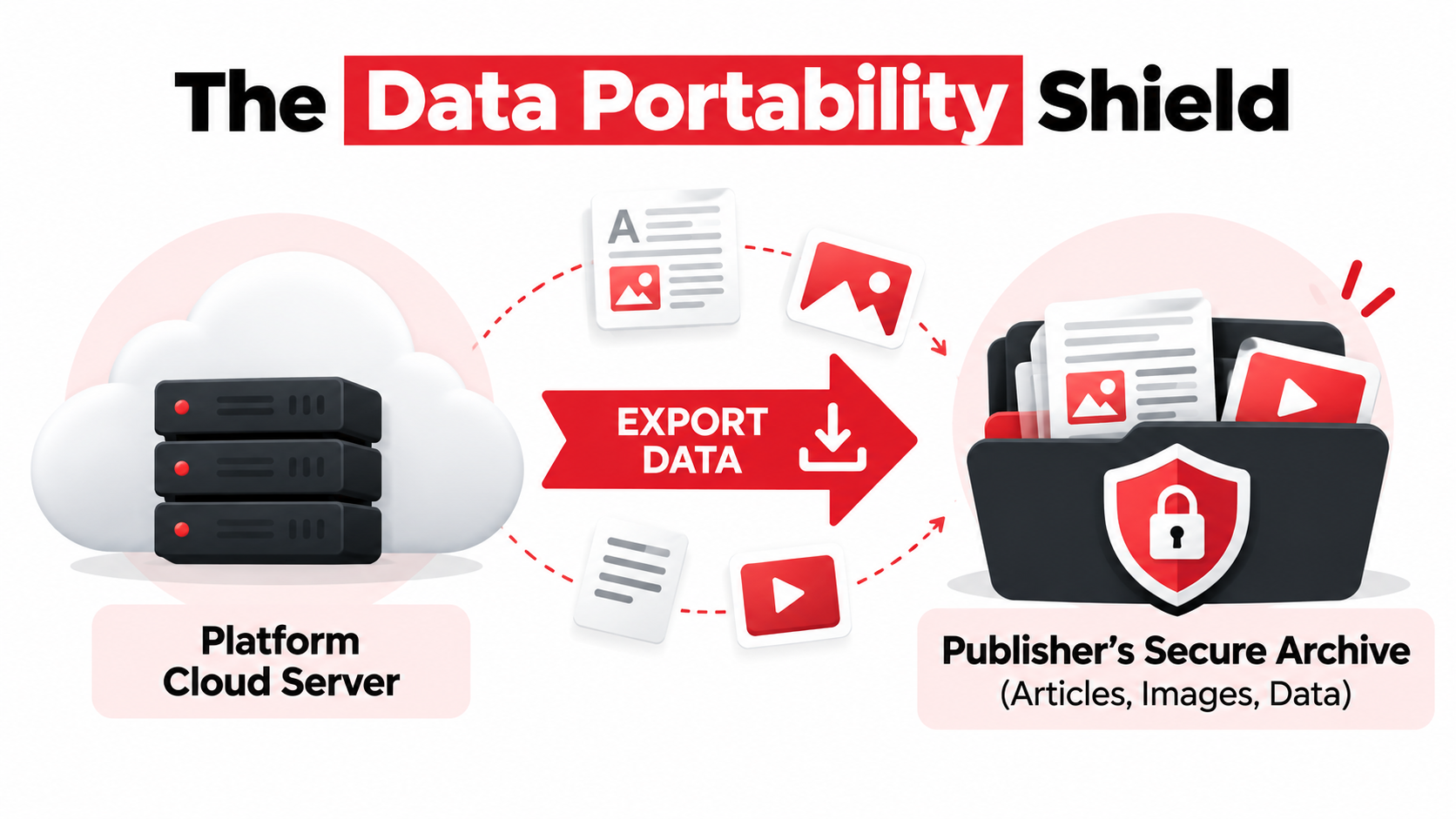
The MOJO Network Standard: Platform Independence for Digital Publishers
The deeper point is that a good platform is architected so that you are never trapped. The relationship should be one you stay in because it actively serves your growth—handling your technical infrastructure so you can focus on journalism and revenue—not because leaving would destroy your work.
Portability of content, direct ownership of the domain, and independent ownership of the brand mean that the platform earns your subscription every single year rather than holding your business hostage.
The honest reality is that if your domain is in your name, your brand is undeniably your own, and your content is fully exportable, your business will always survive. Even in the worst-case scenario where a platform shuts down entirely, you keep your domain, keep your brand, and take your archive to a new home.
The disruption would be real but entirely survivable. The way to guarantee this is not to hope for the best, but to confirm all three points in writing before you begin. A platform confident in its own value will have absolutely no difficulty saying yes to all three.
INFOGRAPHIC: The Publisher's Checklist